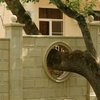
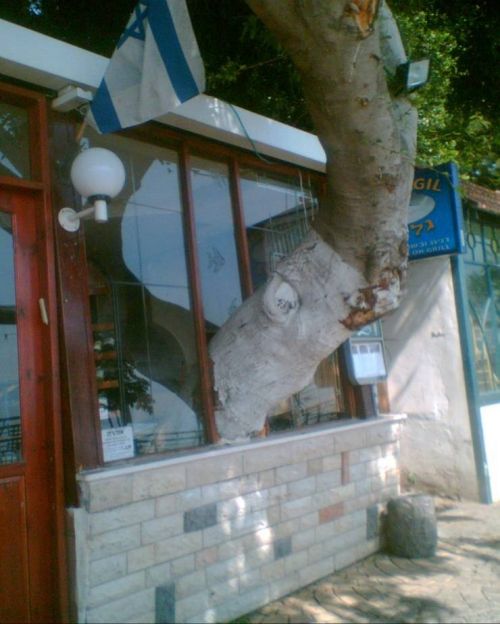
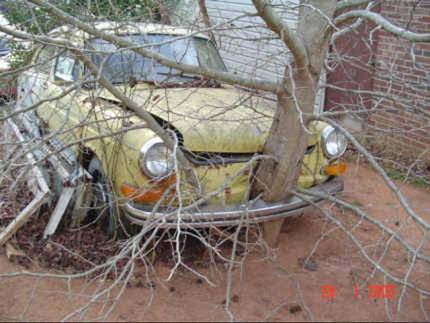
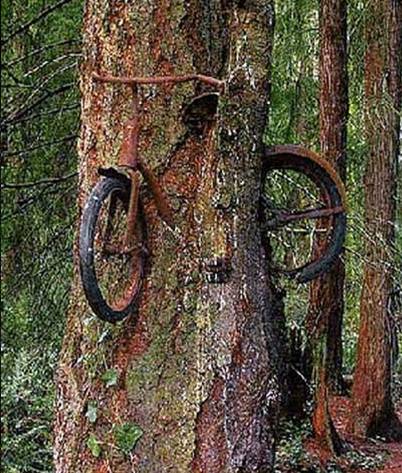
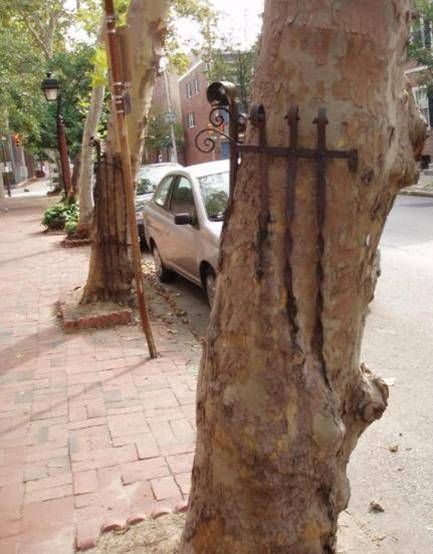
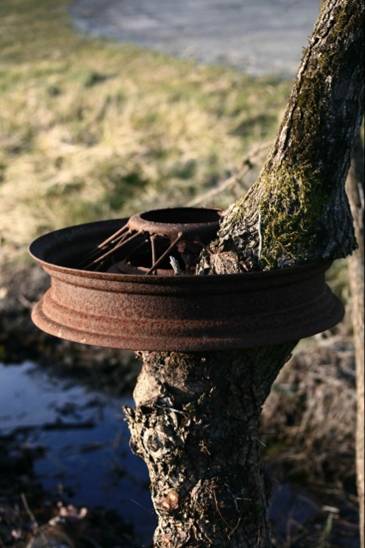
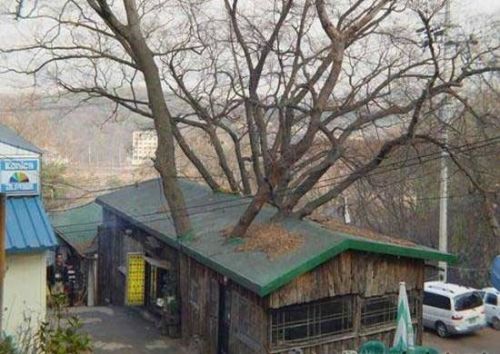
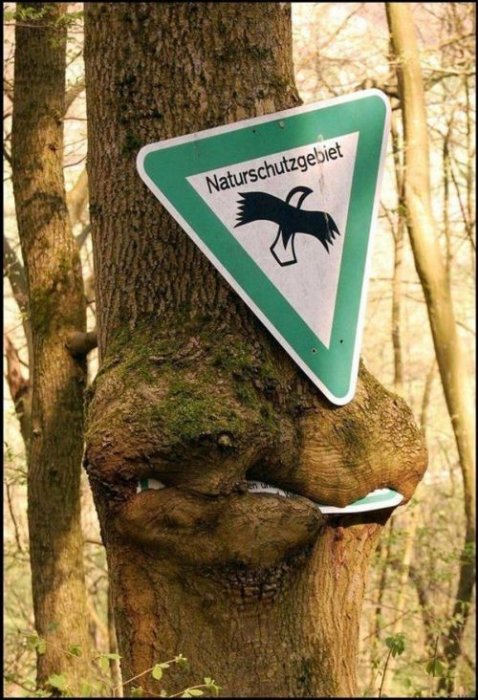
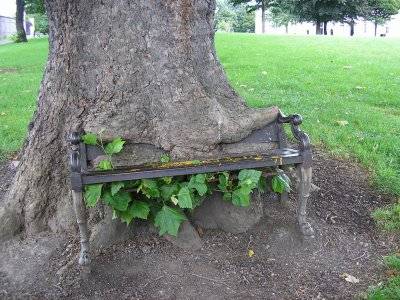
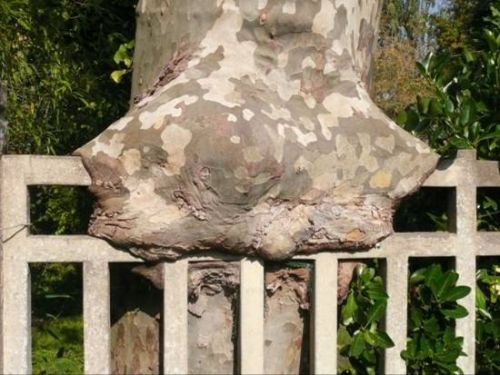
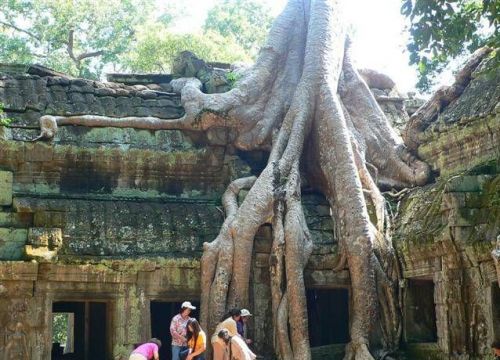
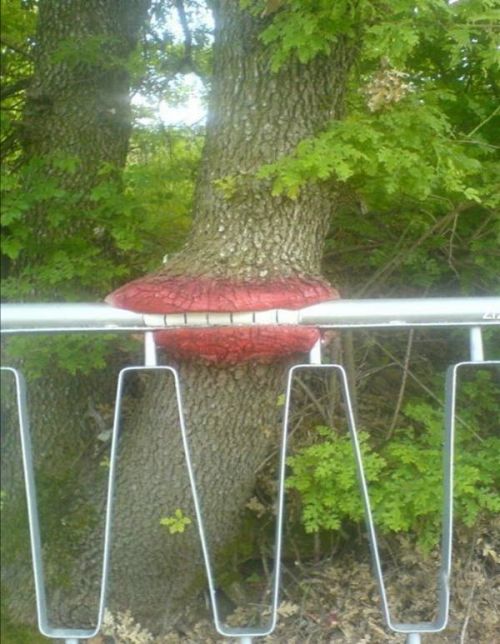
We’ve all seen trees that grow in the direction of sunlight or away from other trees, but here are a few that have really gone out of their way to claim their rightful space.
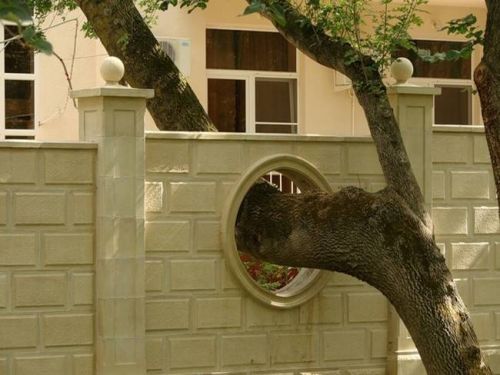
A tree is a perennial woody plant. It is most often defined as a woody plant that has many secondary branches supported clear of the ground on a single main stem or trunk with clear apical dominance. A minimum height specification at maturity is cited by some authors, varying from 3 m to 6 m; some authors set a minimum of 10 cm trunk diameter (30 cm girth). Woody plants that do not meet these definitions by having multiple stems and/or small size, are called shrubs. Compared with most other plants, trees are long-lived, some reaching several thousand years old and growing to up to 115 m (379 ft) high.
Trees are an important component of the natural landscape because of their prevention of erosion and the provision of a weather-sheltered ecosystem in and under their foliage. They also play an important role in producing oxygen and reducing carbon dioxide in the atmosphere, as well as moderating ground temperatures. They are also elements in landscaping and agriculture, both for their aesthetic appeal and their orchard crops (such as apples). Wood from trees is a building material, as well as a primary energy source in many developing countries. Trees also play a role in many of the world’s mythologies (see trees in mythology).

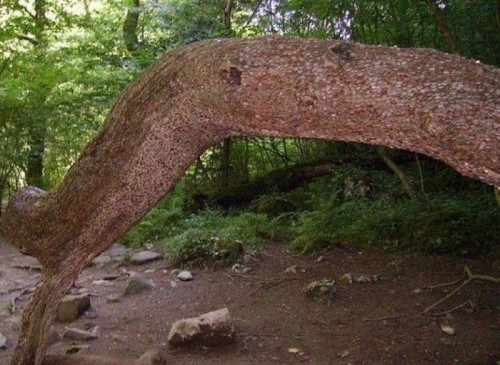 Wish Tree In England
 How To Become Massive Muscle Men
 Unusual Proposal of Convair King...
 What is a Bonsai Tree ?
 Extravagant Office Complex
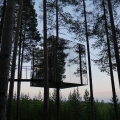 The Mirrorcube – ThreeHous...


[…] Really Unusual Trees […]
[…] Originally Posted by lh_newbie When I was cutting back the mondo grass around our two Live Oaks in the front yard, I noticed that the BOTH have chains wrapped around their base and it’s embedded into approx 2/3 of the tree. This clearly can’t be good for the tree. I remembered an image of an old tree that had grown around a bicycle .. first time I saw it was in an art class years ago. Googled it and there it was … along with images of other very accommodating trees. Don’t know if some of the other images are photoshopped .. but I’m thinking they are not. Trees are pretty tough if left alone. Love the tree that ate the "Nature Preserve" sign! Really Unusual Trees – Woondu […]
tree…
As I was digesting your post it all the sudden occurred to me to me that I can totally relate to your viewpoint….
Love this Woondu!!! Had so much fun with this site!!!
Thank you!!!
[…] https://woondu.com/really-unusual-trees/ […]