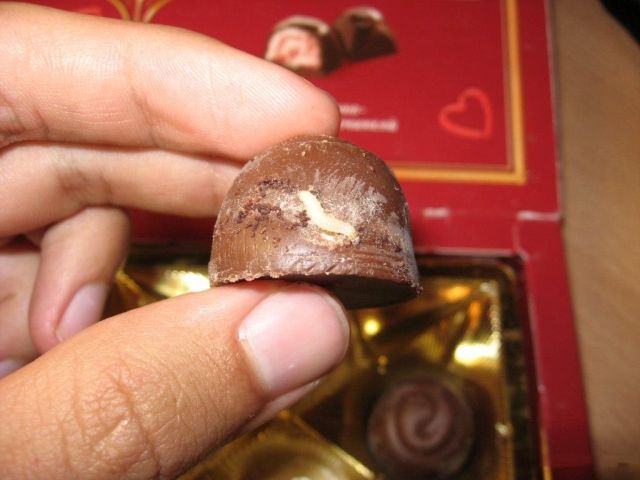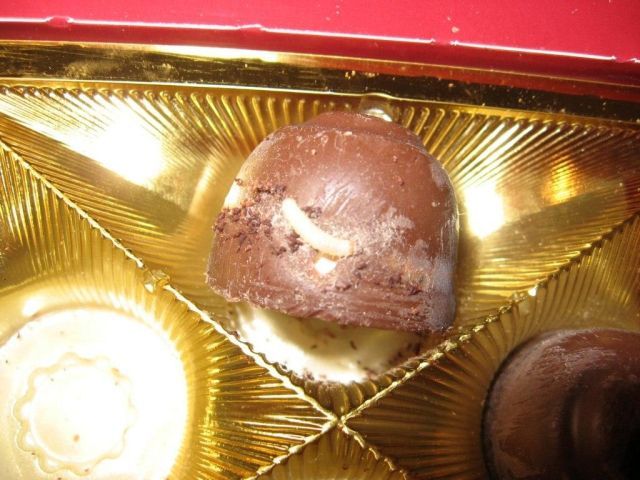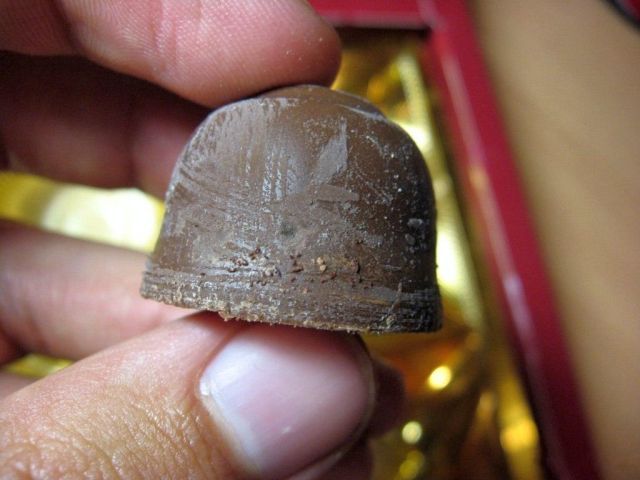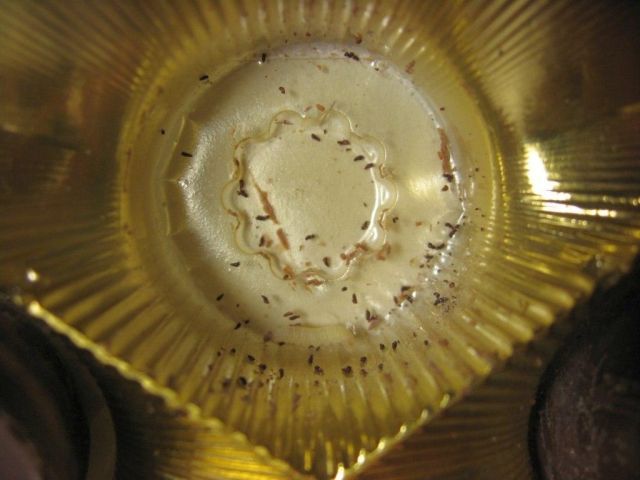
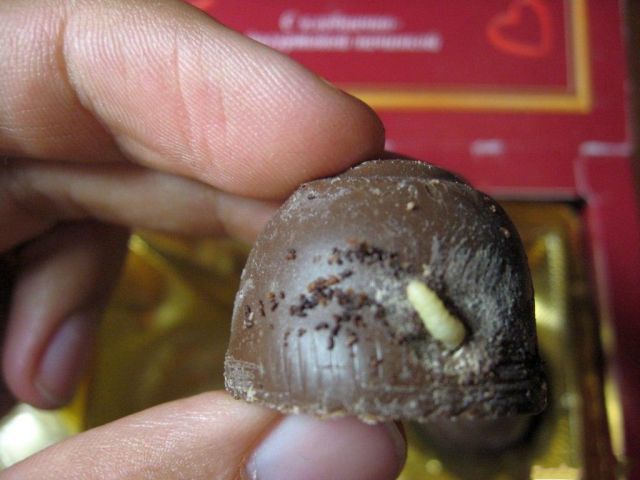
Look what i’m found in my candy, instead of tasty toppings i’m got live meat! I mean, really, what more i can expect from these unknown candy’s? Be careful when you buy some suspicious products you can’t know what is inside of the box… And also check expire date!

unpleasant_discovery_in_a_candy_01

unpleasant_discovery_in_a_candy_02

unpleasant_discovery_in_a_candy_03

unpleasant_discovery_in_a_candy_04

unpleasant_discovery_in_a_candy_05

unpleasant_discovery_in_a_candy_06

unpleasant_discovery_in_a_candy_07

Candy, specifically sugar candy, is a confection made from a concentrated solution of sugar in water, to which flavorings and colorants are added. Candies come in numerous colors and varieties and have a long history in popular culture. The word “candy” comes from Arabic qandi, derived from Persian qand, meaning “sugar” probably from Sanskrit khanda “piece (of sugar),” which again perhaps from Dravidian (cf. Tamil kantu “candy,” kattu “to harden, condense”).” In North America, candy is a broad category that includes candy bars, chocolates, licorice, sour candies, salty candies, tart candies, hard candies, taffies, gumdrops, marshmallows, and more. Vegetables, fruit or nuts glazed and coated with sugar are called candied.

Leave a Reply

You must be logged in to post a comment.

Humor definition
Humour or humor (see spelling differences) is the tendency of particular cognitive experiences to provoke laughter and provide amusement. Many theories exist about what humour is and what social function it serves. People of all ages and cultures respond to humour. The majority of people are able to be amused, to laugh or smile at something funny and thus they are considered to have a "sense of humour". The term derives from the humoral medicine of the ancient Greeks, which stated that a mix of fluids known as humours (Greek: χυμός, chymos, literally juice or sap, metaphorically, flavour) controlled human health and emotion. A sense of humour is the ability to experience humour, although the extent to which an individual will find something humorous depends on a host of variables, including geographical location, culture, maturity, level of education, intelligence and context. For example, young children may favour slapstick, such as Punch and Judy puppet shows or cartoons such as Tom and Jerry. Satire may rely more on understanding the target of the humour and thus tends to appeal to more mature audiences. Nonsatirical humour can be specifically termed "recreational drollery".

Woondu – Something strange is Digg proof thanks to caching by WP Super Cache!